








What is ketamine-assisted psychotherapy?
In ketamine-assisted psychotherapy, the anesthetic ketamine is used to treat treatment-resistant depression and, in some cases, other co-occurring mental health conditions. Ketamine is not a classical psychedelic, but in low doses it may produce experiences similar to psychedelic states — involving altered consciousness, a sense of ego dissolution, and increased neuroplasticity.
These effects can help create space for new perspectives, emotional processing, and therapeutic change when supported by trained professionals in a safe environment.
How does psychedelic assisted psychotherapy work?
In short, ketamine can help the brain form new connections where it has previously been locked into unhelpful thought and behavior patterns.
Many people experience rapid relief from depressive symptoms. When this renewed energy and openness are combined with psychotherapy, the focus shifts toward understanding the underlying mechanisms of depression and developing strategies that reduce the risk of relapse.
How does the treatment work?
Before treatment
Before treatment, a nurse or doctor will measure your blood pressure, pulse, and oxygen saturation. A brief review of your medical history is also performed, in addition to the comprehensive medical assessment completed earlier in the process.
During treatment
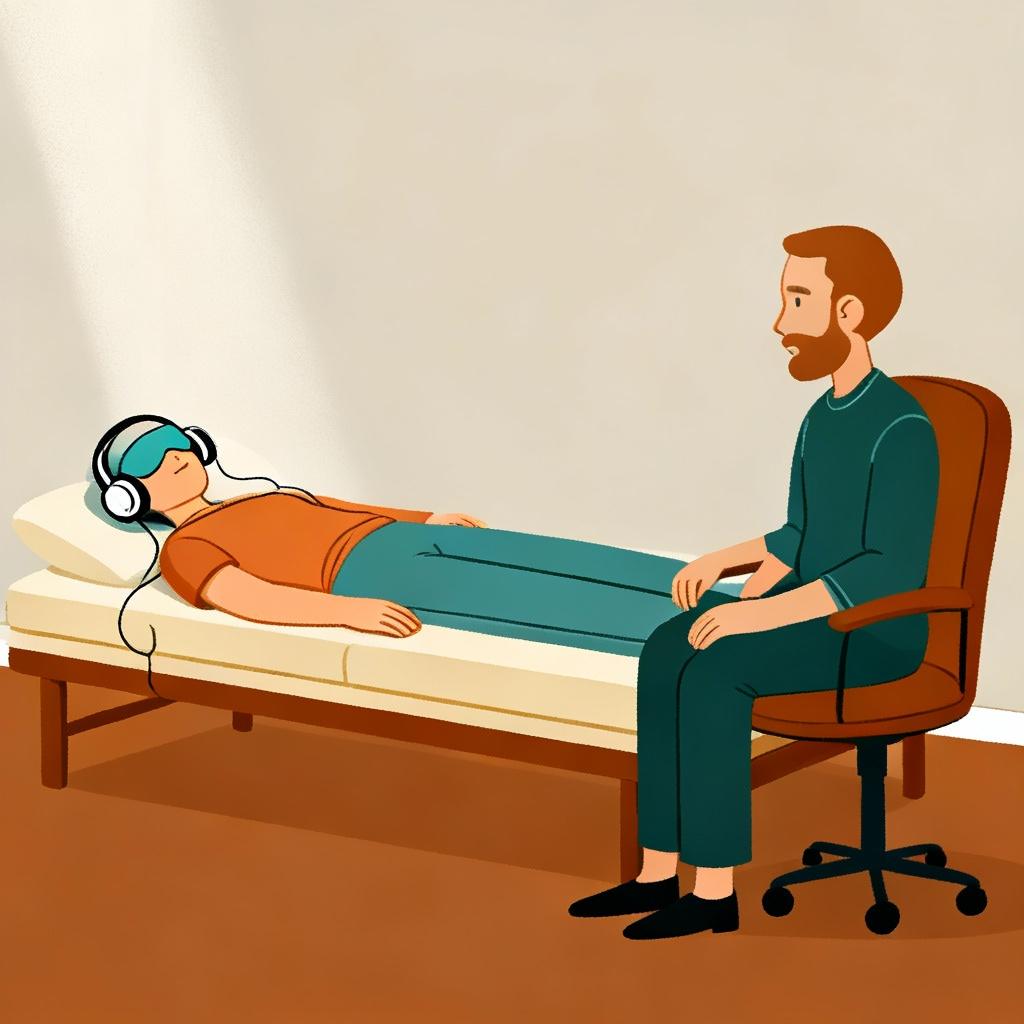
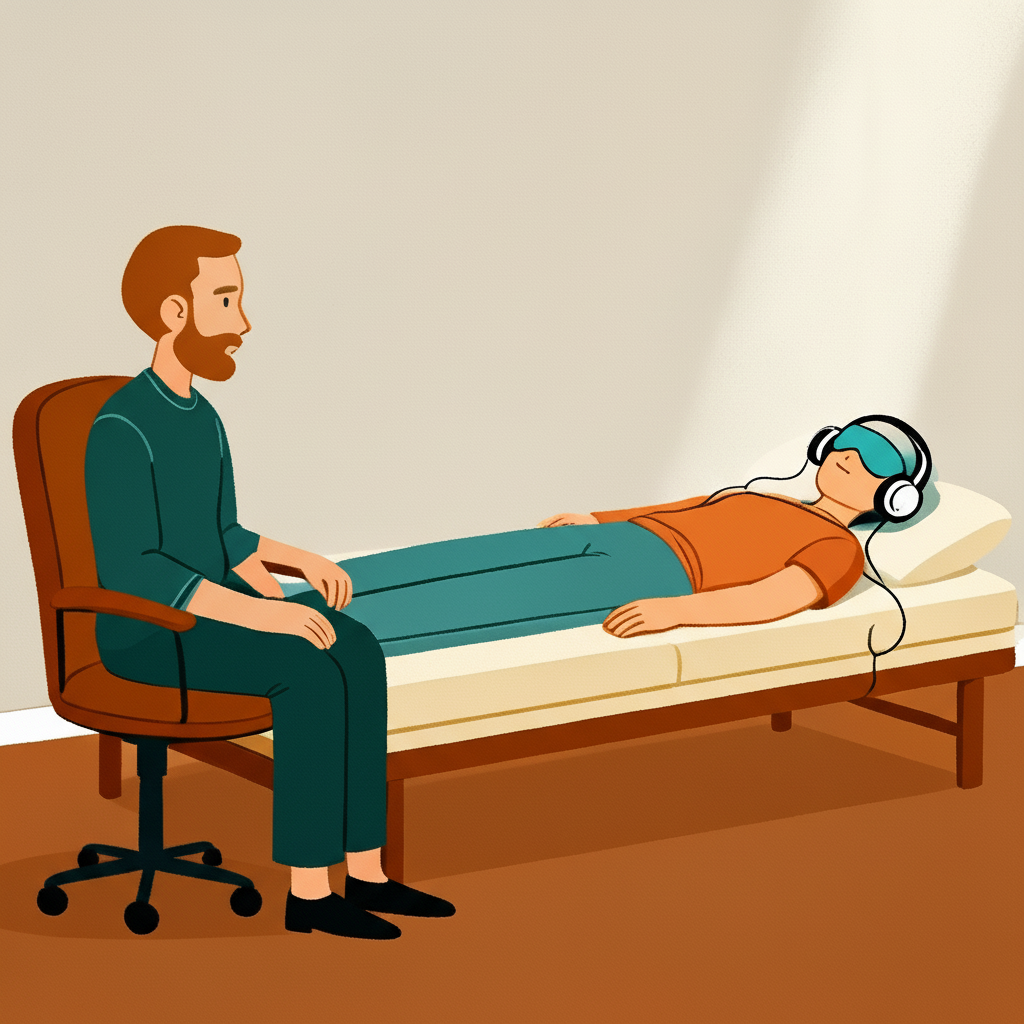
Ketamine is administered as an intramuscular injection in the upper arm – similar to a vaccine. After the injection, you will rest comfortably on a daybed with an eye mask and headphones, while a specially curated playlist is played. A psychologist will be present throughout the entire session, together with a doctor or nurse. The psychologist remains available at all times, and medical staff will monitor you closely and be ready to assist if needed.
Ketamine usually begins to take effect within 3–5 minutes after the injection. The psychoactive phase peaks after about 10–15 minutes and lasts for approximately 30–45 minutes. Throughout this time, the psychologist supports you, ensures safety, and documents observations in your clinical journal.
After treatment
Most people feel noticeably better and return to a normal state of consciousness within 60–75 minutes. The psychologist will then help you reflect on the experience and begin the integration conversation. Some may need up to 90 minutes before they are ready to leave the treatment room — for this reason, each session is scheduled for 90 minutes. A nurse is also available should you feel unwell afterward.
Whats required?
Ketamine-assisted therapy often requires partial sick leave, as the process can be time-consuming and emotionally intense. A stable life situation is also important during the treatment period. We recommend that you have someone you trust accompany you to and from your appointment. If this is not possible, we can assist in arranging a taxi for you.
How is the treatment experienced?
Psychedelic therapy can feel very different from person to person.
A common experience is a sense of flow, where one temporarily gains a new perspective on life and where the connection to time and space becomes more abstract. This can lead to breakthroughs in rigid interpretations and is often described as one of the most meaningful experiences a person has had.
The themes that arise can be abstract. Many describe gaining an overview of their life, viewing past traumatic experiences from a safe distance, or feeling a deep sense of connection with the world around them. Some also find that emotions are expressed through images or symbols.
Your psychologist will help you frame and understand the experience, as it can initially feel confusing or overwhelming.
In our experience, the themes that emerge often reflect deeper emotional patterns linked to depression and personal growth.
Whats the time frame of the treatment?
The treatment process typically lasts between three weeks and two months, depending on the need for follow-up.
Medication-assisted psychotherapy includes a minimum of six medication-supported sessions combined with psychotherapy over a period of at least two weeks. Research shows that this structure is essential for achieving lasting effects and reducing the risk of relapse.
How quickly do you feel the effect?
Some patients notice improvement after the first or second treatment, while for others it takes more time. What matters most is the overall process — allowing the combination of treatment and psychotherapy to work together over time to create lasting change.
Do I have to conduct an assessment and preparatory interviews with Dr.Dropin?
To be approved for ketamine-assisted therapy at Dr.Dropin, you must first complete steps 1 and 2 of the treatment process.This ensures that the treatment is medically safe and that you are likely to benefit therapeutically from continuing the program. All treatment is carried out under close supervision by both a doctor and a psychologist, within a safe framework and with the highest professional standards.
Is it legal and safe?
To be approved for ketamine-assisted therapy at Dr.Dropin, you must first complete steps 1 and 2 of the treatment process.
This ensures that the treatment is medically sound and that you are likely to benefit therapeutically from continuing the program.
All treatments are conducted in accordance with current regulations, and ketamine is used off-label by a medical doctor following thorough evaluation. Each session takes place under medical supervision, with close collaboration between the doctor, psychologist, and nurse to ensure safety and high professional quality throughout the process.