Shockwave therapy for Jumpers knee
Shockwave therapy is effective for jumper’s knee because it stimulates the body’s natural healing process in a tendon that typically has poor blood supply and slow recovery. The treatment increases blood circulation, breaks down damaged tissue, and activates cells involved in tissue repair. This can lead to reduced pain and gradual improvement in function, especially in long-standing cases where traditional measures like exercises and rest have not provided sufficient relief.
See availabilityPlease do not hesitate to call us on 24 07 70 13.
This is what our customers think about Shockwave therapy

When should you initiate the treatment?
Shockwave therapy for jumper’s knee is typically considered when pain has persisted for several weeks or months, and standard treatments like rest, load management, and specific exercises (such as eccentric strengthening) have not led to sufficient improvement. Most people begin with conservative care, but if the tendon does not show signs of recovery after 6–8 weeks, shockwave therapy can be a suitable next step. In chronic cases, or when returning to sports is a priority, it may also be appropriate to start shockwave therapy earlier in consultation with a healthcare provider.
Check availability
How is shockwave therapy performed for jumpers knee?
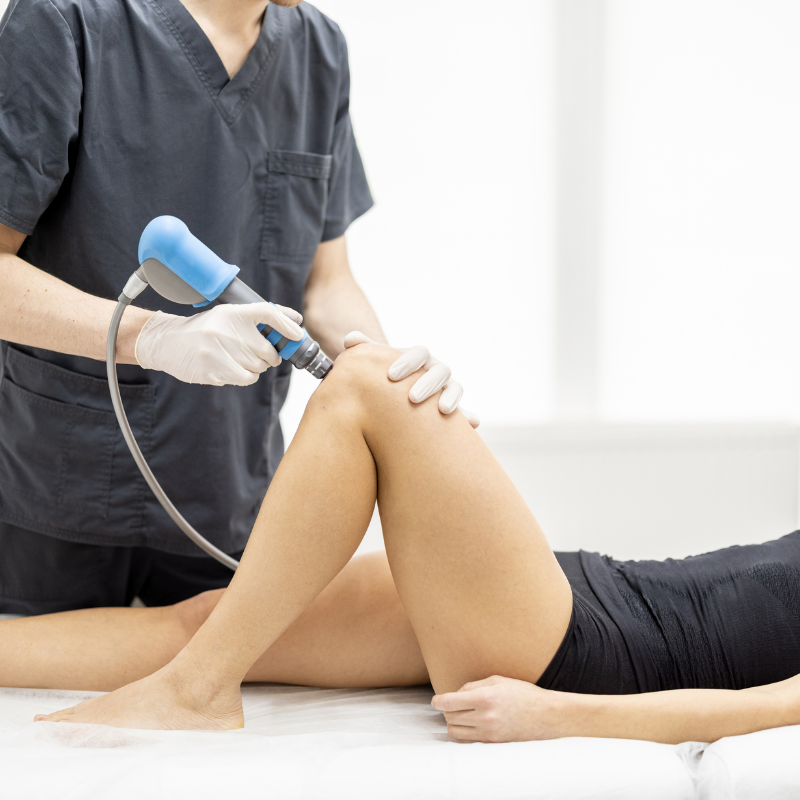
The treatment involves a device that delivers high-frequency shockwaves directly to the painful area, most often where the patellar tendon attaches to the lower part of the kneecap. Each session typically lasts 5 to 10 minutes, and the intensity is adjusted according to the patient’s pain tolerance. The goal is to stimulate the body’s natural healing process, reduce pain, and promote recovery in the damaged tendon attachment. This treatment is particularly used in long-standing or chronic cases of jumper’s knee, where healing has stalled and the tissue needs extra stimulation to restart the repair process.
Check availabilityWhat is the typical number of treatments?
For jumper’s knee, the typical number of shockwave therapy sessions is between 3 and 6, depending on the severity of the condition and how the body responds. Treatments are usually spaced one week apart to allow the tissue time to react and begin the healing process between sessions.
Some people notice improvement after just a couple of sessions, while others may require the full series. In some cases, especially with chronic or long-standing symptoms, additional treatments may be needed. The treatment plan is adjusted individually.
Check availabilityWhat other measures are important in combination with shockwave therapy?
In combination with shockwave therapy for jumper’s knee, several additional measures are important to support healing and ensure lasting improvement. Key strategies include:
- Load management
Reduce or modify high-impact activities such as jumping, running, and deep squats—especially during painful phases. - Specific strengthening exercises
Eccentric strength training (e.g., decline leg press or slow lowering movements) has well-documented benefits for jumper’s knee. - Mobility and stretching
Stretching the quadriceps and calf muscles can reduce tension on the patellar tendon and improve knee mobility. - Ergonomic and technical adjustments
For athletes, it may be helpful to assess technique, footwear, training surfaces, and adjust training volume or type accordingly. - Cold therapy when needed
Applying ice after activity can help reduce irritation and discomfort. - Gradual return to activity
Progression should be controlled, focusing on pain-free improvements in strength and function.